REQUEST A QUOTE


 Find a branch
If you’re thinking about replacing your existing windows, it’s essential to measure the opening correctly before choosing your new windows. This will help you ensure that the new windows fit perfectly and work optimally. While it may seem intimidating at first, measuring a window is relatively simple if you follow the right procedure.
In this article, we’ll guide you through each step you must take to measure your windows correctly in order to ensure that the installation goes smoothly. We’ll talk about the tools you’ll need, the important measurements you should take and some common mistakes to avoid. By following our simple instructions, you’ll be able to take precise measurements for your new windows so that you’re guaranteed a result that’s perfectly adapted to your space.
Before you begin, you’ll need a tape measure, a pencil and a piece of paper so you can write down the dimensions.
Taking window measurements
There are three things you’ll need to measure: the height of the window, the width of the window and the depth of the window. The best method of measuring a window is to take measurements in three different places and write down the smallest of the three measurements. The reason for taking multiple measurements is that window frames aren’t always perfectly square. By using the smallest measurement, you’ll ensure that your new window isn’t too large for the existing opening. This way, you’ll avoid any unpleasant surprises during the installation process. Taking precise measurements will also ensure that the window isn’t too small for the opening, as this could lead to drafts.

Is it better to measure windows from the inside or the outside?
We strongly recommend taking your measurements on the outside of the window frame. To get exact measurements, it’s best to remove the interior window surround or any other molding that may be obscuring the frame.
Measuring the height of the window
Begin by measuring the height of the window on the right side, in the center and on the left side. Write down the measurements and keep the smallest one. Measuring the height in three different places will help you verify that the wall is level. If the wall slopes, taking measurements in different places will help ensure that the new window is the correct size to fit in the opening.
Measuring the width of the window
Next, measure the width at the bottom, in the center and at the top of the window. Once again, only keep the smallest measurement and write it down. Measuring the width in three different places will enable you to determine if the window frame is warped or if the wall has any irregularities that could affect the size of the opening.

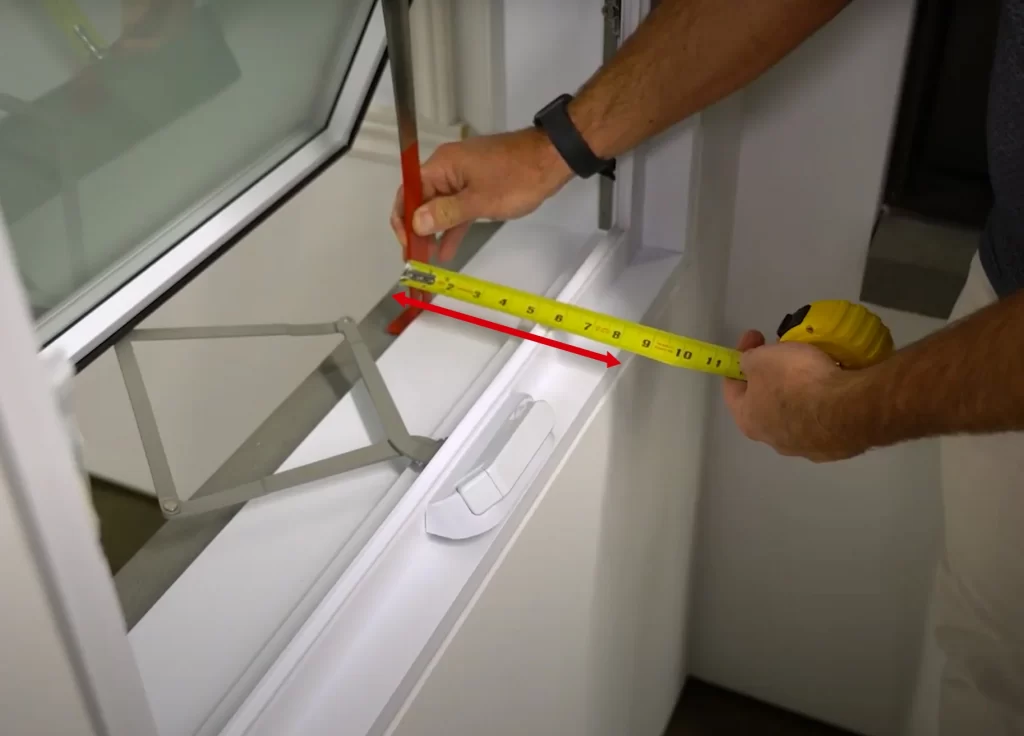
Measuring the depth of the window
To measure the depth of a window, you need to measure the distance between the interior wall and the outside edge of the window frame. Here’s how to get started:
- Open the window all the way.
- Place the end of the tape measure on the inside edge of the wall and measure the distance to the outer edge of the window frame.
- Repeat the measurement in two other places on the window frame: in the middle and on the other side.
- Write down the smallest measurement.
By measuring the depth in three different places, you’ll be able to get a precise measurement of the available space. This is important in order to ensure that the new window is perfectly adapted to the existing opening.
Our expert tips for correctly measuring your windows
If you plan to replace your windows, there are certain little tricks that can make all the difference when taking the measurements. Here are a few:
- Measure twice. To avoid mistakes, double check all of the measurements to make sure that they’re accurate and consistent.
- Get someone to help you. As the saying goes, two heads are better than one. Having someone help you take the measurements will ensure that they’re more precise, especially if your windows are very large.
- Consider any factors that might influence the measurements. Be sure to account for window stops, structural elements and irregularities in the wall that could affect the dimensions of the window.
- Call on the services of a professional, if necessary. If you have any doubts about how to take the measurements or if you want to make sure that your measurements are correct, you can ask a professional to measure the window for you. Don’t hesitate to contact Portes et Fenêtres Verdun if you have any questions.
Now that you have the precise dimensions of your window, you can get a more accurate estimate of the costs of your renovation project. Based on the measurements you’ve taken, your preferred color and style, your budget and the orientation of the opening, our consultants will be able help you determine what type of window will best meet your needs. For more information on the available models and types of windows, see our window section.